
Early experiences working with Brian Clouston - John Towndrow's journey as a landscape architect (Part 1)
John Towndrow from Cornwall, Ontario, spotted FOLAR’s celebration of Brian Clouston https://www.folar.uk/celebration-of-brian-clouston and contacted FOLAR (info@folar.uk) to say that he had also worked with Brian Clouston.
We invited him to tell us more about his experience. This is what he sent us:
I was intrigued by the series looking back on the legacy of Brian Clouston and I thought it might be interesting to share my experience with that firm as well as some background about how I came to be there.
Getting the job in the UK
As a newly graduated landscape architect from the University of Guelph in Canada, I was interested in gaining experience abroad, so my wife, Susan and I decided to go to the UK in 1972, to get some valuable experience in Landscape Architecture, thinking it had a much longer history than in Canada, where it was still in its infancy. I had been practicing for two years when I began looking for a position in the UK. We didn’t have a long-term plan but thought we would stay for at least two to three years. Due to my father being born in Britain, I had the right to work there.
After writing to many companies in the UK, I received some encouraging letters….
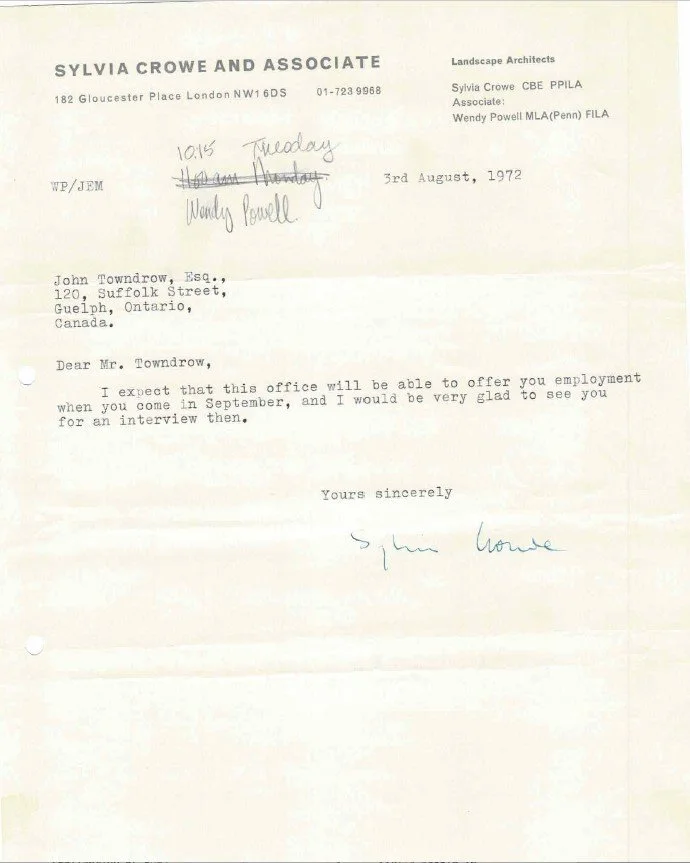
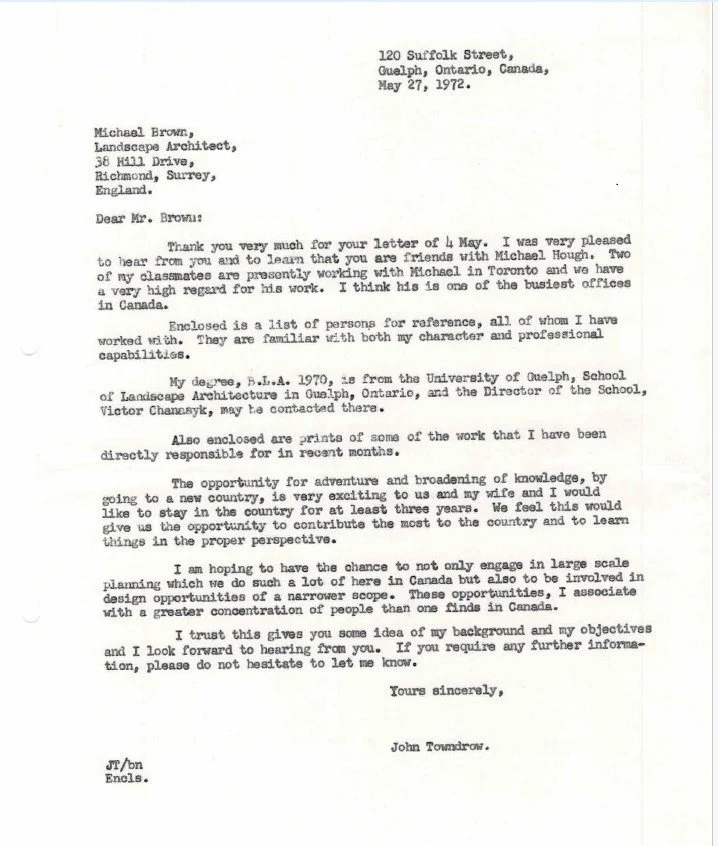
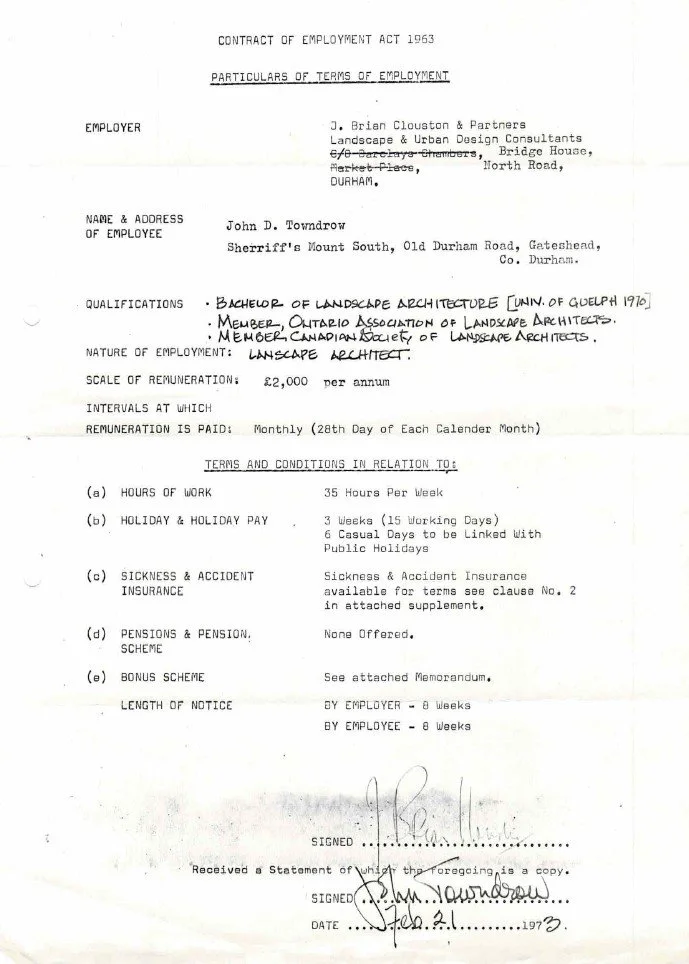
….and decided to take a chance and go there in the hope of getting at least one job. So, I set up series of interviews starting in London. My first job offer was in Richmond, but after a little research, I realized that the cost of a flat for myself and my wife would take up my entire salary. So, I began to travel northward with interviews along the way. It was in Durham city where I was not only offered a job in Brian Clouston‘s office, but it was the first place where I could find an affordable flat - not in Durham City, but in nearby Gateshead.
I only vaguely remember the interview with Brian. He was most interested in my experience in land reclamation that I had done with William Coates and Associates in Guelph, a firm specializing in reclamation of gravel pits and quarries. Clouston had a contract to do a master plan for derelict land along Teesside, so I appeared to be a good fit for him. I had also worked at a firm doing work on municipal waterfront park development. What I remember was the attraction of going into a firm with a good cross section of professionals – landscape architects, engineers, architects, interpretive specialists and illustrators – a young, energetic office.
Susan had just graduated from the University of Guelph School of Landscape Architecture the year before and also wanted to work. She was able to get a job at Napper, Errington and Collerton & Associates in Newcastle. After nine months she found that, as someone with only a year of experience, she didn’t get the mentoring she needed, so decided to leave. She subsequently did a bit of work with me at Clouston’s but otherwise pursued other interests.
Work culture at Clouston’s
The first thing I realized when I began working there was that, after only two years of practice, I had more experience than many of the people working in Brian‘s office. So much for the long history of landscape architecture!
Coming from Canada, the benefits of working in an office like Clouston‘s were quite a surprise to me. First, he offered three weeks of vacation a year, as well as an extra day added onto each statutory holiday (so two extra weeks). He also offered a profit-sharing scheme for employees.
[FOLAR Footnote - at Napper, Errington Collerton & Associates in Newcastle, EN Winship, MRTPI and AILA (Associate of the Institute of Landscape Architects) was a practice associate. This practice still exists - https://www.napperarchitects.co.uk/75-years/. If anyone knows anything about EN Winship please let FOLAR know. ]
And then the icing on the cake was an annual retreat to a resort once a year. The retreats were held at a different place each year – I recall wonderful long weekends in the Lake District and Stratford while I was there. The idea was to bring all people in the five offices together as a kind of appreciation gesture, to get to know each other, share ideas and perhaps build a sense of loyalty and familiarity with the team members. At the time there were offices in Glasgow, Durham, Leeds, Northampton and London so it was a sizeable group. The amazing thing was that employees as well as their spouses or partners and children were invited, and the places were quite elegant with wonderful food and amenities and programs for everyone. I recall there were some exciting football games among the employees (mostly male).
I was able to get to know team members from the other offices which facilitated collaboration, but I recall there was mostly an emphasis on having fun and relaxing. Even during the oil embargo of 1974, when the only office heat came from night storage heaters, we all felt like a cohesive team that could get through the crisis.

The Clouston gang at the home of a friend of Ralph Cobham’s in London.
I wish I could name them all.
Standing, left to right is Sue Cobham, Ralph, Tony ? and two other landscape architects
I’m sitting on the dock next to Susan in red.
Team Members at Clouston’s
The team members were amazing - all bringing a share of expertise to round out the needs of each project. One of the highlights of my time there was working with Ralph Cobham, a landscape architect who I hope you can interview as he had a lot of influence on the profession.

Ralph Cobham and me at the Cow and Calf on Ilkley Moor
We worked on projects like the Teesside reclamation project - getting trees to grow on fly ash and reclaiming derelict areas. Teesside was indeed cutting-edge work, and we consulted with soil specialists. I had some experience in Canada: I had learned from reclaiming rock piles in Sudbury, Ontario, and working on mines and gravel pit reclamation. I recall Ralph and I travelling to the north coast of Scotland to source very hardy plants at nurseries there. We were attempting to plant on PFA (coal fly ash) so these were extremely harsh conditions
At the time, the industrial focus had shifted to offshore oil, so that’s how many of the lands along the Tees River became abandoned and derelict. In addition to the job of reclaiming derelict industrial land, the municipalities were also interested in injecting new economic life as well as open space along the river. There were new opportunities for development like housing, light industrial, parks, sports fields, and other amenities so the master plan tried to lay out a vision for the long-term future.
There were many municipalities involved at the time including Middlesbrough, Redcar, Stockton-on-Tees, Hartlepool and Cleveland. I’m not certain how successful we were but I’m sure over time development has evolved around a more productive land use. Apart from the technical aspects, the report set up a vision which was essential in getting people to realise the potential. It would be fun to find our original report.
There were also reclamation projects dealing with the effects of high visitor numbers in popular recreational areas, including Ilkley Moor and many others.
In all the projects I felt there was encouragement and support from Brian to be bold and innovative in the approach to projects, and that has had a very positive impact on my career
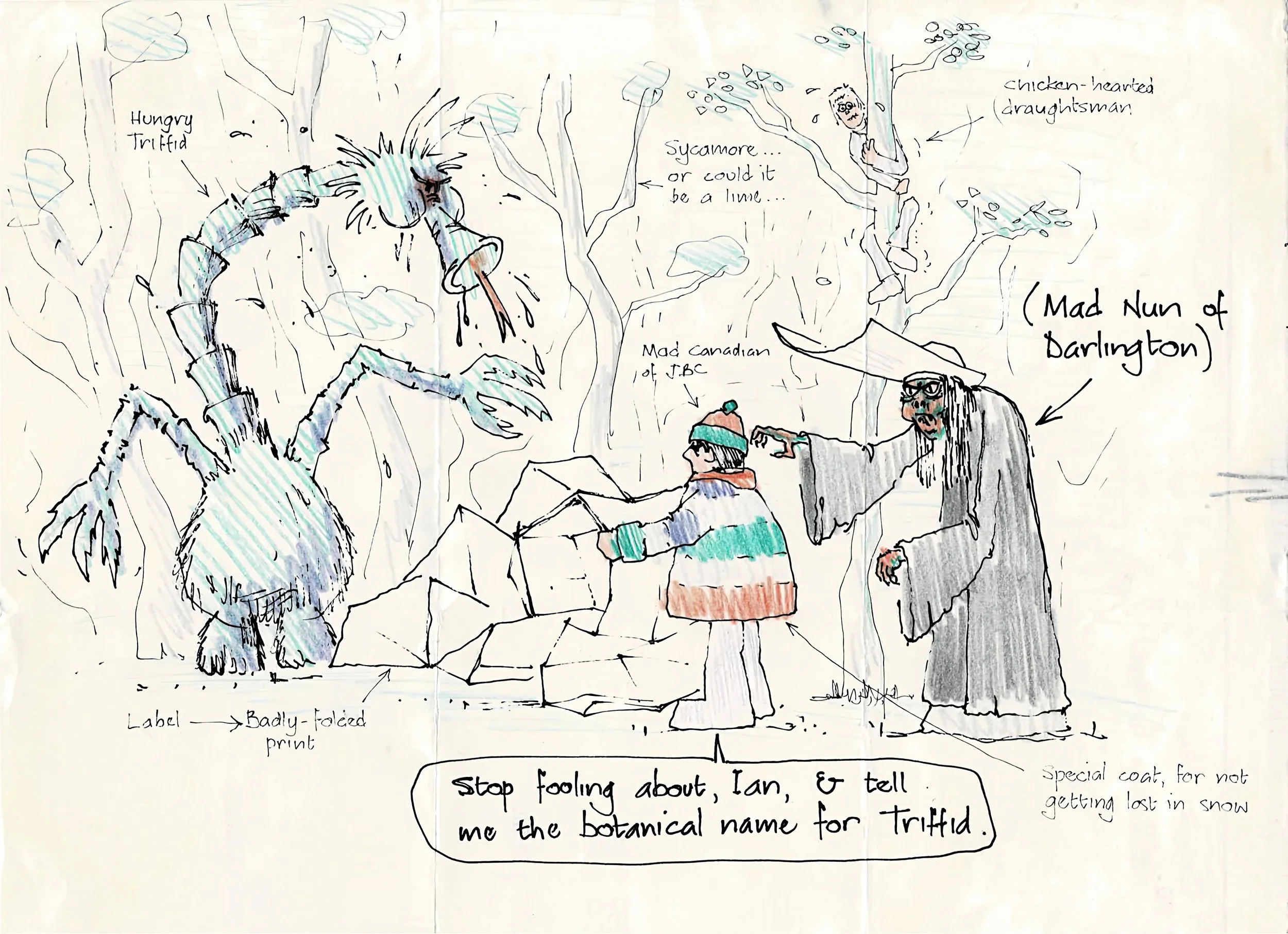
A parting gift from my Clouston colleagues. They loved to make fun of my Hudson’s Bay coat. (This is a sketch done by one of Clouston’s draftsmen – Ian [Gordon?] Bell I think - when I was leaving to go home. They loved my colourful Hudson's Bay Coat)
Moving on
We would probably have stayed longer, but by 1974 during the oil crisis, costs were going up quite steeply and my wife and I were concerned that we would never be able to afford a plane ride home again. So, we made the decision to have a few months travelling before heading home.
Our time in the Northeast England was an interesting challenge. We experienced some culture shock with the Geordie dialect which sounded like a foreign language to us so there were some funny moments – such as trying to understand bus conductors who had a mix of Geordie and Indian accents. We were shocked at the cost of living. Our electricity bill was about the same as our monthly rent, even with having a small electric heater, on only when in a particular room. In the winter we concluded that people went to their local pub more for the heat than for a pint. A telephone was a non-starter of course so we had to depend on phone booths that were often out of service. We always had to have plenty of change in hand! Having said all that, we were thrilled to have this rich experience with so much culture and interesting places to visit - all within a short distance.
Once back in Canada, I was able to begin working for Parks Canada, the agency that looks after national parks and national historic sites across the country. My experience in England had helped me in all my subsequent work. I will be always grateful for the opportunity that Brian Clouston and Partners provided for me early in my career.
After returning to Canada Susan eventually opened a practice in residential and small commercial landscape design that she ran for about thirty years.
John Duncan Towndrow: Brief Curriculum Vitae.
1970 – Graduated from University of Guelph School of Landscape Architecture
1970-1971 – Knox Martin and Kretch, Engineers and Landscape Architects, Brampton, Ontario. The work was mainly site planning for waterfront municipal parks in Ontario.
1971-1972 – William Coates and Associates, Landscape Architects, Guelph, Ontario. My work was focussed on gravel pit and quarry reclamation as well as some commercial site planning.
1972 – 1974 – J. Brian Clouston and Partners, Landscape & Urban Design Consultants, Durham City, UK. Worked on the Teesside reclamation master planning and implementation. This included a big push for tree planting across the UK (Plant a Tree in 73). We also worked on reclamation of overused areas around the Cow and Calf rocks on Ilkley Moor. There were also a series of other reclamation projects, but I don’t have a clear memory of them.
1974 – 1989 – Parks Canada Regional Office, Cornwall, Ontario. I was an assistant Landscape Architect for several years and then became Head Landscape Architect. The work involved designing public spaces (campgrounds, trails, visitor centres, parking lots and access roads) in National Parks, National Historic Sites and National Historic Canals.
1989 – 2004 - Parks Canada Regional Office, Cornwall, Ontario. I moved to the Planning Department where I was responsible for Management Planning for the Trent Severn Waterway National Historic Canal. I went on to complete plans for five other National Historic Sites as well as contributing to multi-disciplinary teams in the Planning Department. This office was a joy to work in as we had a full complement of professional colleagues, including planners, architects, landscape architects, engineers, archaeologists, resource conservation specialists, socio-economic researchers, interpretive and graphic designers, financial analysis specialists, record keepers and librarians.
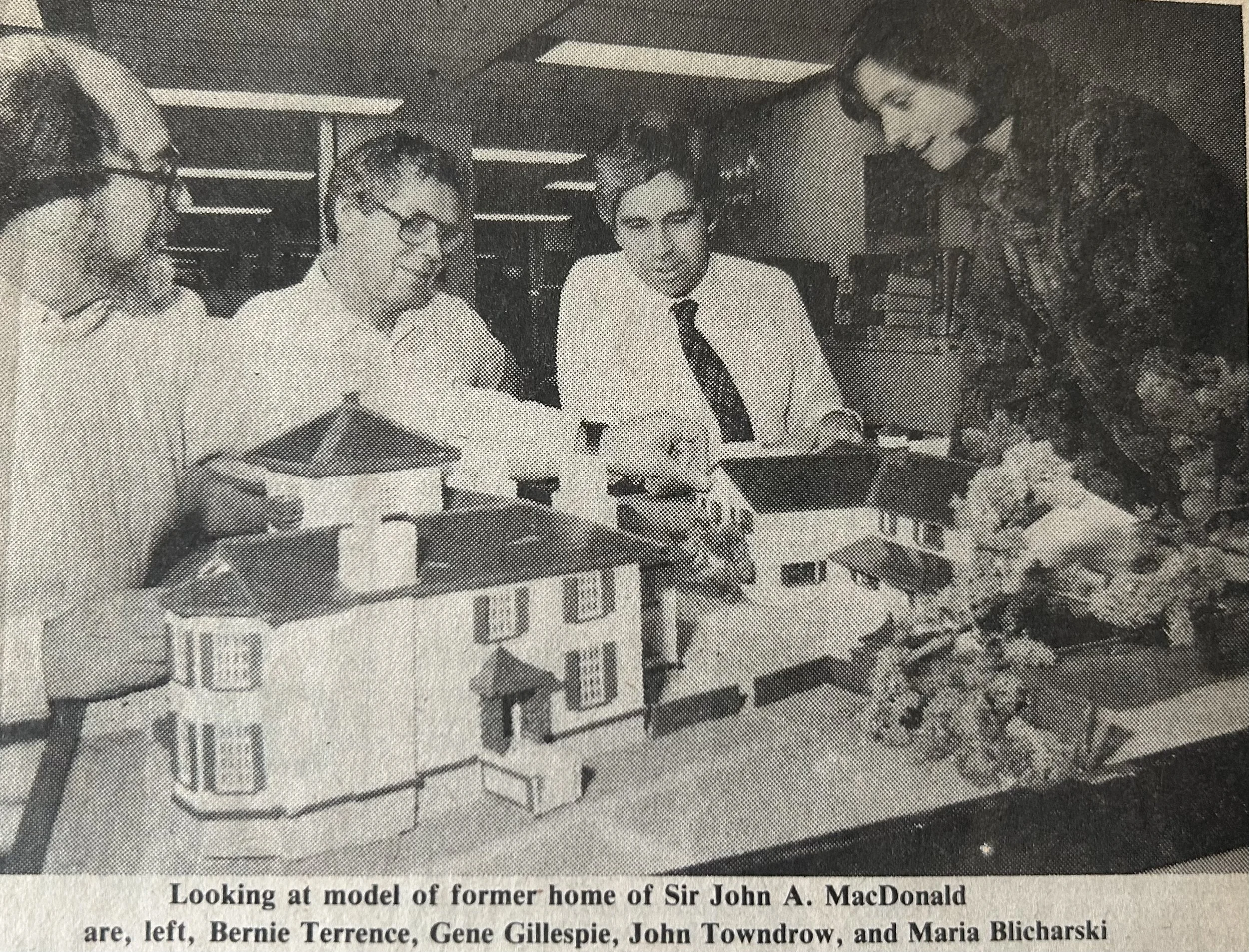
Project Manager of new Visitor Centre k Bellevue House - former home of Prime Minister Sir John A. MacDonald in Kingston Ontario
Retirement
Since retirement I have been involved in environmental advocacy, founding Transition Cornwall+ along with Susan and others as part of the Transition Town movement here in Canada – a movement started in Totnes, UK. I also have many other volunteer duties around building resilient communities and environmental action and social justice. This year will mark my 20th year of retirement.
To learn more about John Towndrow’s childhood in Reading, designing gas valves, wool shop window in Reading High Street celebrating Canadian quins and whether to emigrate to Australia or Canada… please see Part 2 JOHN TOWNDROW FROM READING
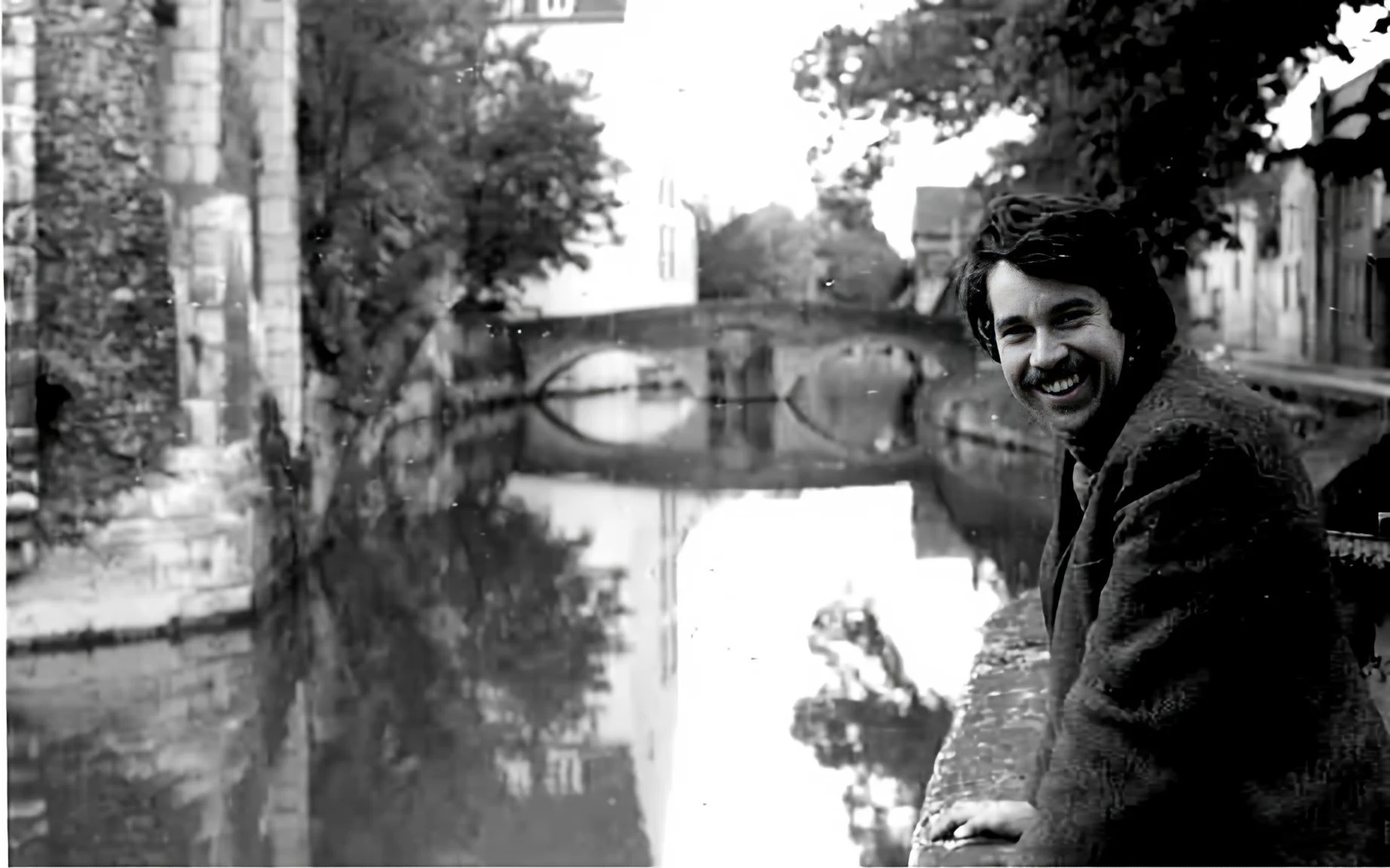
John Towndrow 1970s in Durham (?)
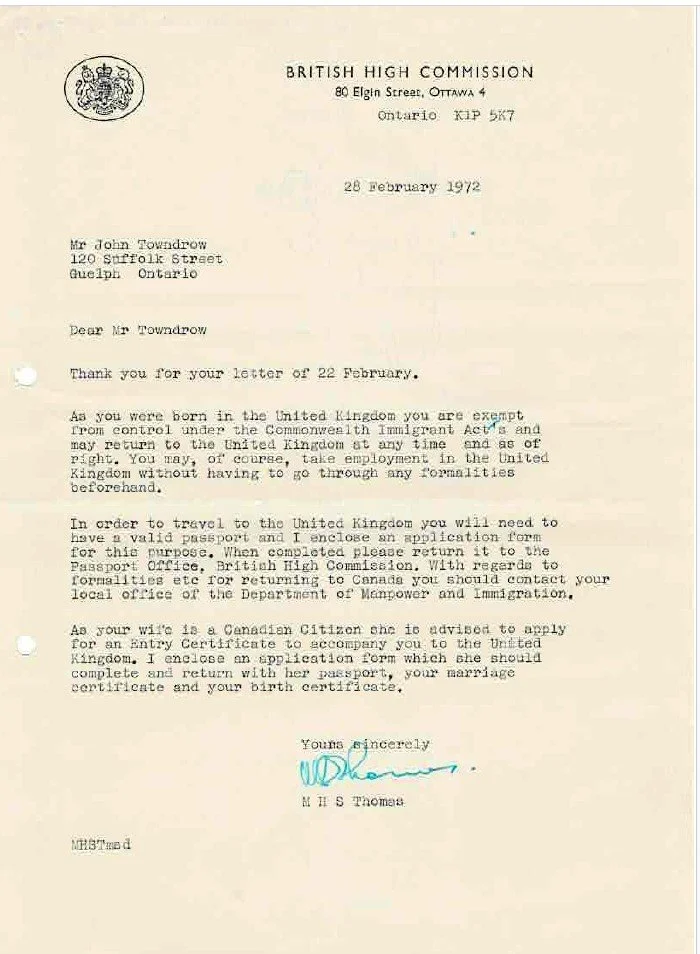
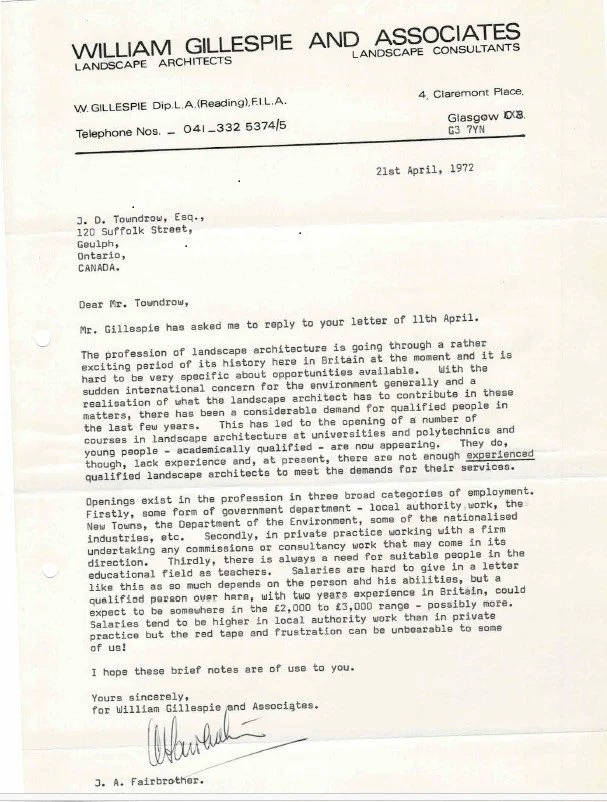
[FOLAR Footnotes: 1.William Gillespie studied for his Diploma in Landscape Architecture at Reading; and 2. The author of this letter from Gillespie’s practice was James Alick (Rex) Fairbrother, brother of Nan Fairbrother. He moved to Australia and in 1975 was head of landscape architecture at Canberra College of Advanced Education (the University of Canberra). See Wilson, Glen. “Writing and Reflecting.” Australian Garden History 22, no. 2 (2010): 9–13. https://www.jstor.org/stable/24918727.]
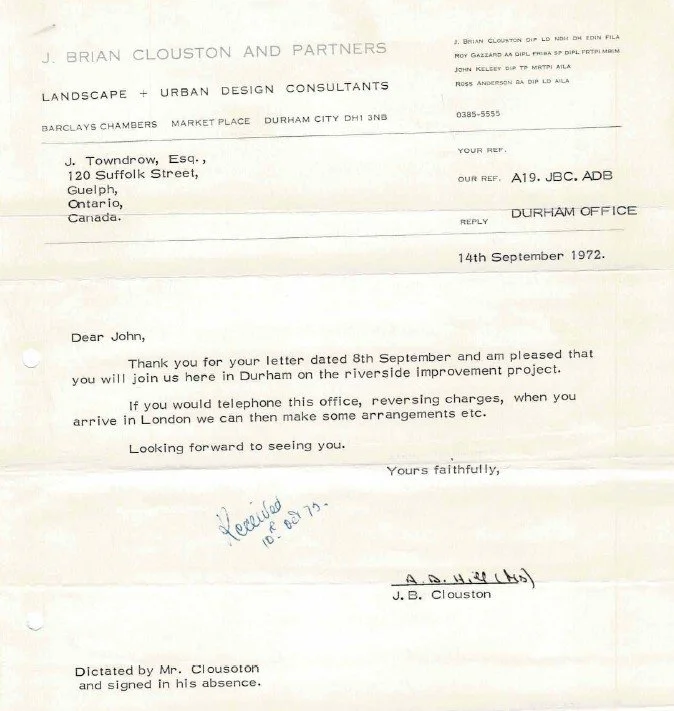
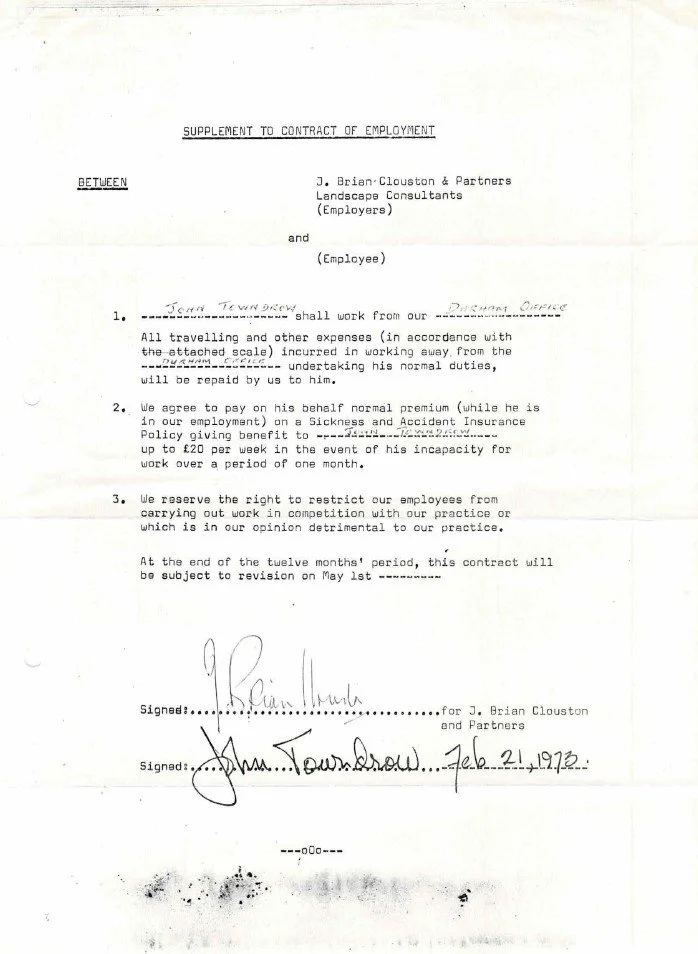
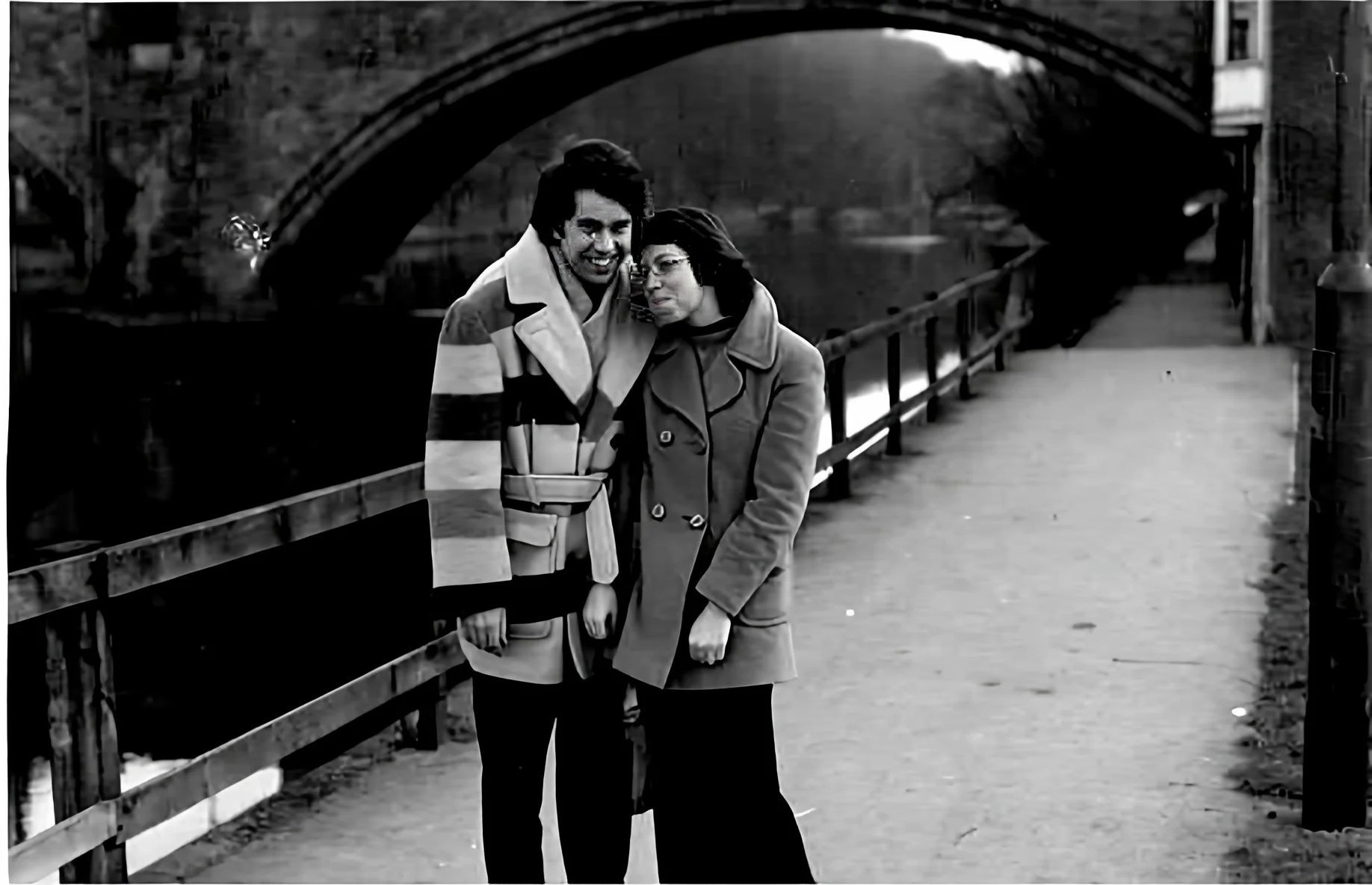
John and Susan Towndrow
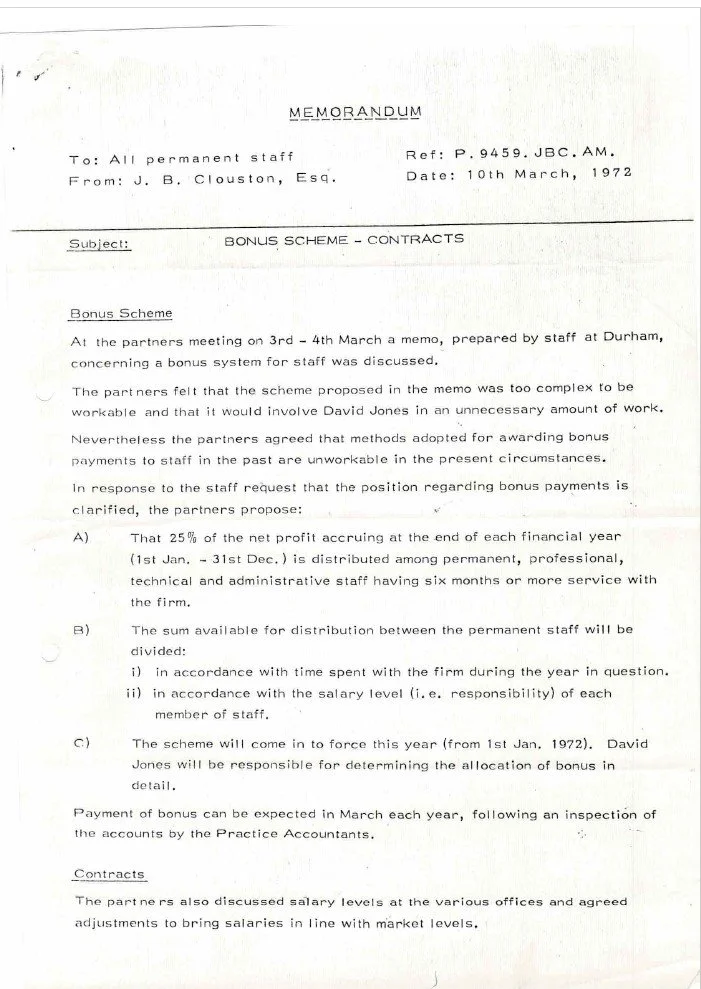
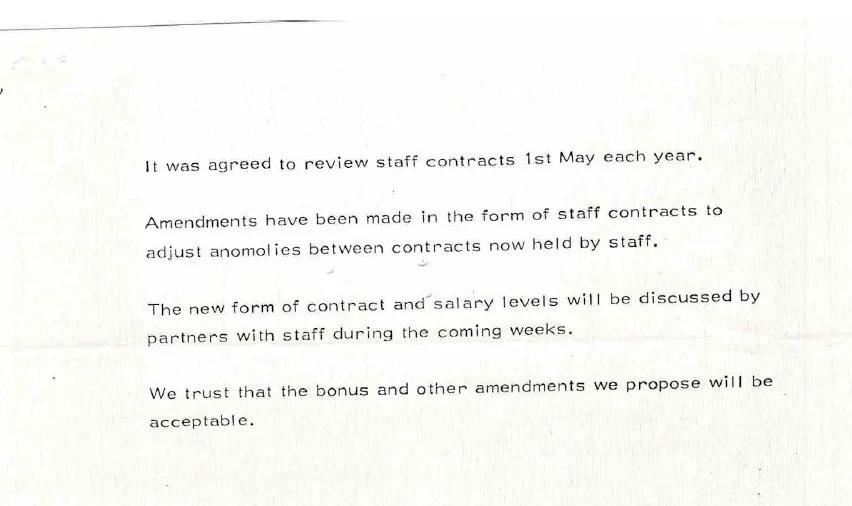
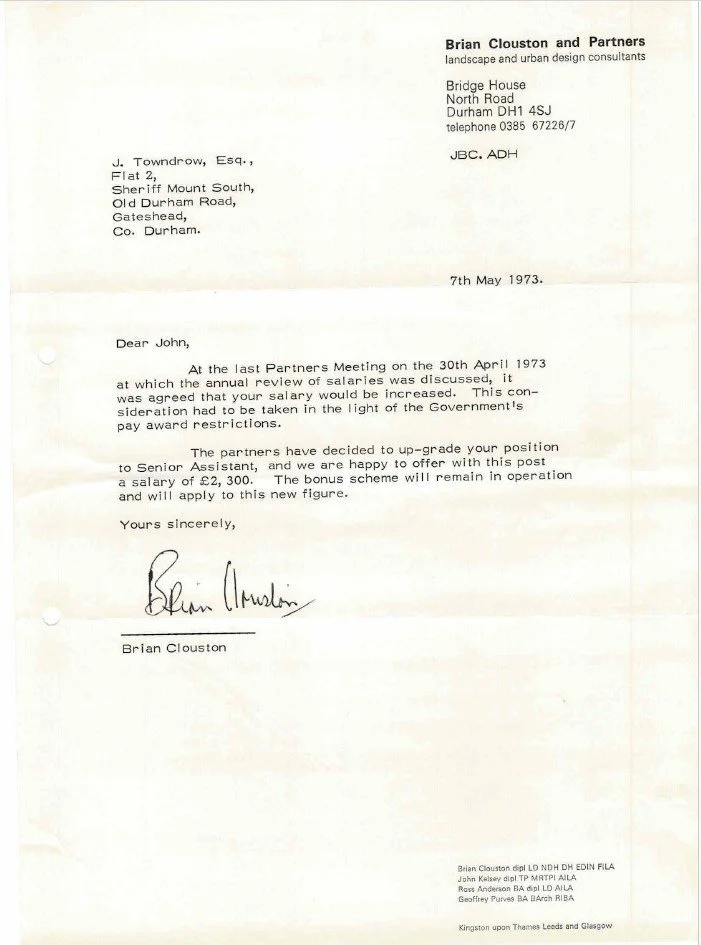
I also worked with an architect, Ray Craig who went on to open his own practice; Cathy MacFie, an environmental and interpretive specialist who moved to New Zealand with her doctor husband, as well as Landscape Architect/Planner Eric Brookbanks who moved to Australia. I also became friends with Cathy’s brother Peter Goulder, who was considering a career in Landscape Architecture and indeed went on to follow that path. As with the others, we formed a warm friendship with Peter and his spouse Sheila. Sadly, Peter has died since – much too early. I also let a colleague of mine, Jim Douglas, know that Clouston was looking for more Landscape Architects, so Jim eventually came over to work at the office. His wife became pregnant soon after arrival and their first son was born in Newcastle. When he returned to Canada, he worked briefly for Parks Canada but before long opened his own office in Ottawa, Ontario.
We have kept in touch with Ralph, Ray, Cathy, Eric and Peter and their families and have visited with them in the UK and they here in Canada and we have exchanged annual news at Christmas. These have been wonderful friendships for over fifty years.

My parting gift from the staff at Clouston’s with the Geordie expression ‘Gan Canny’
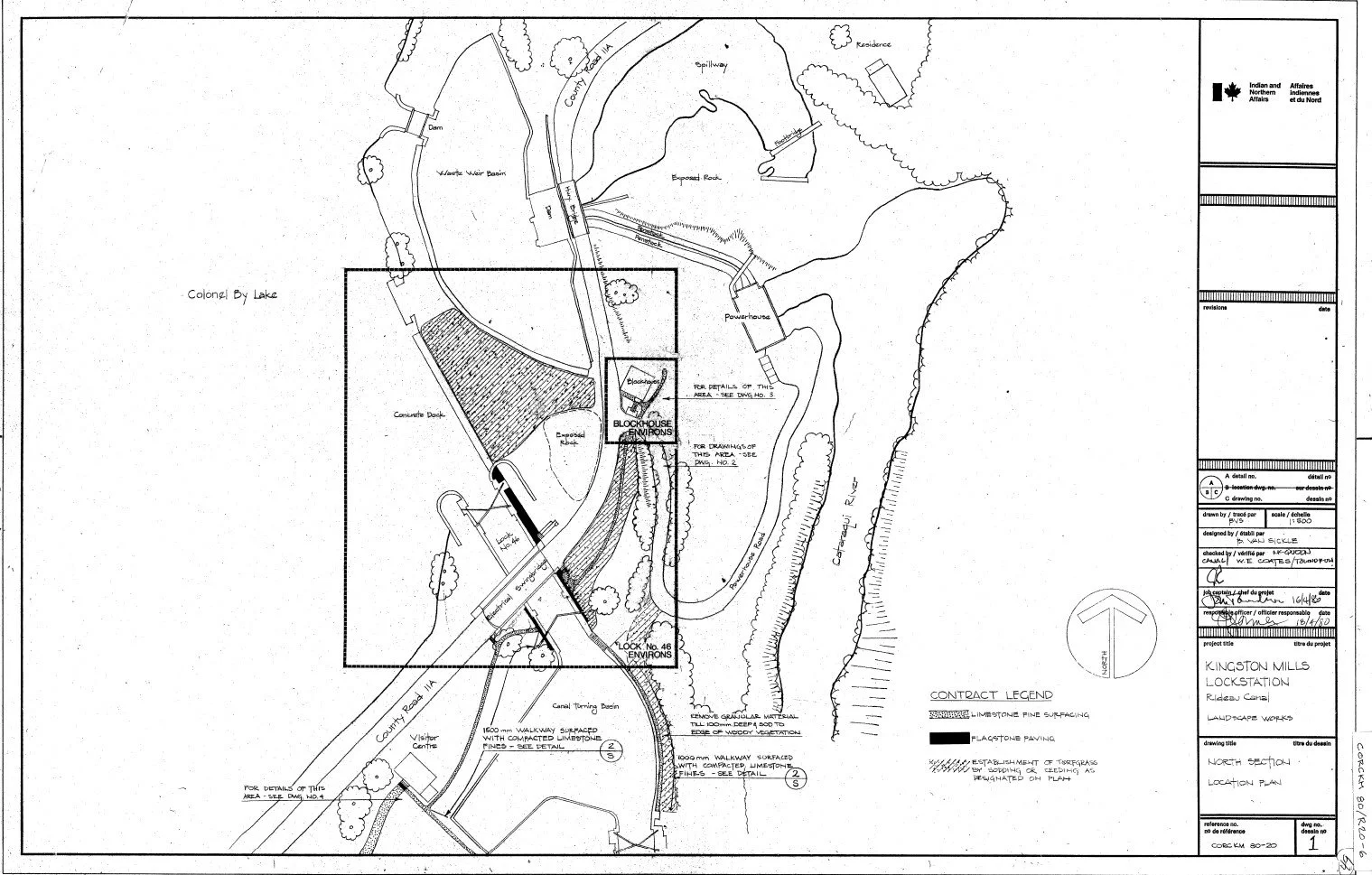
Kingston Mills Lockstation improvement works 1980
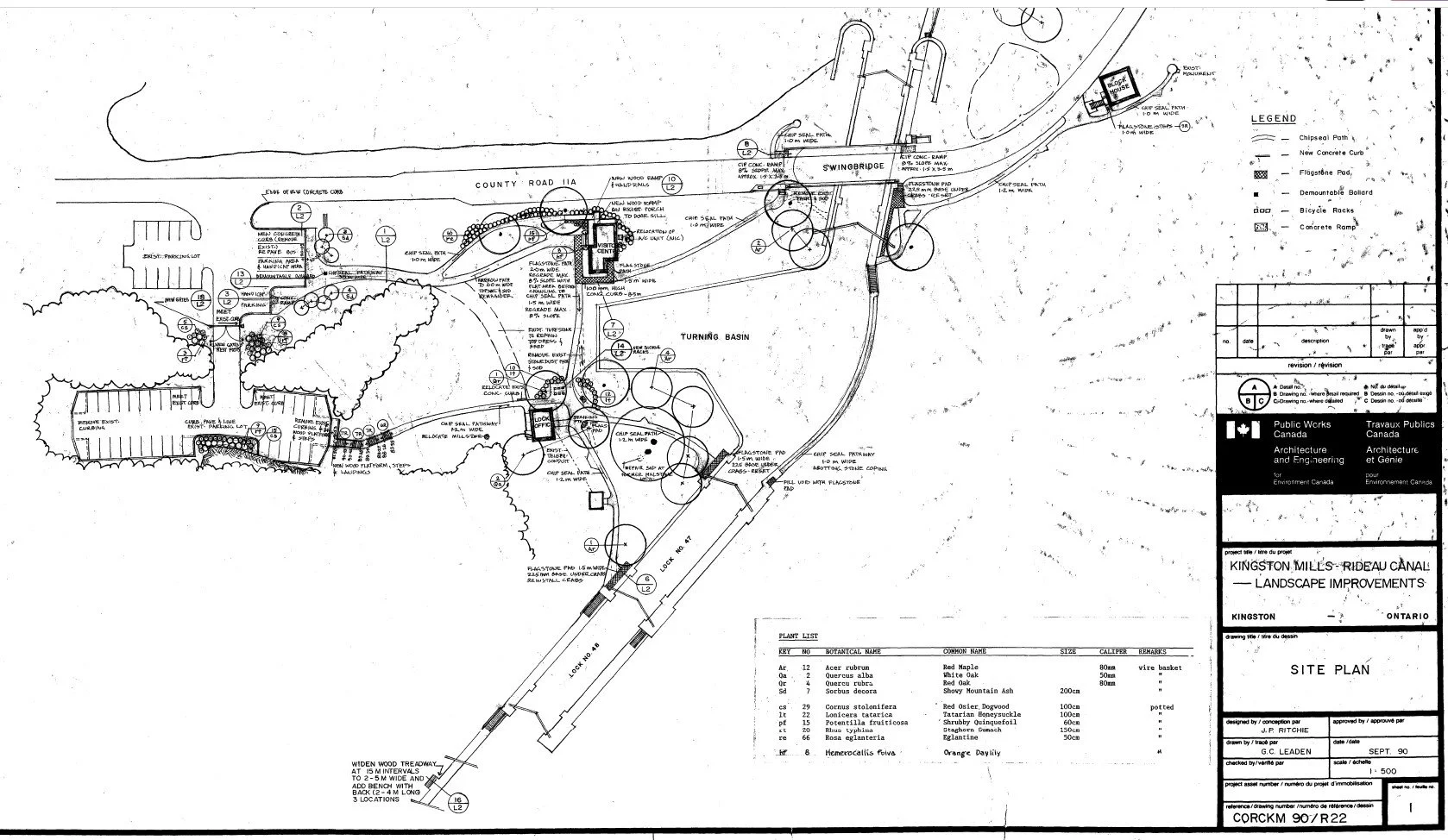
Kingston Mills Rideau Canal, landscape improvements 1990
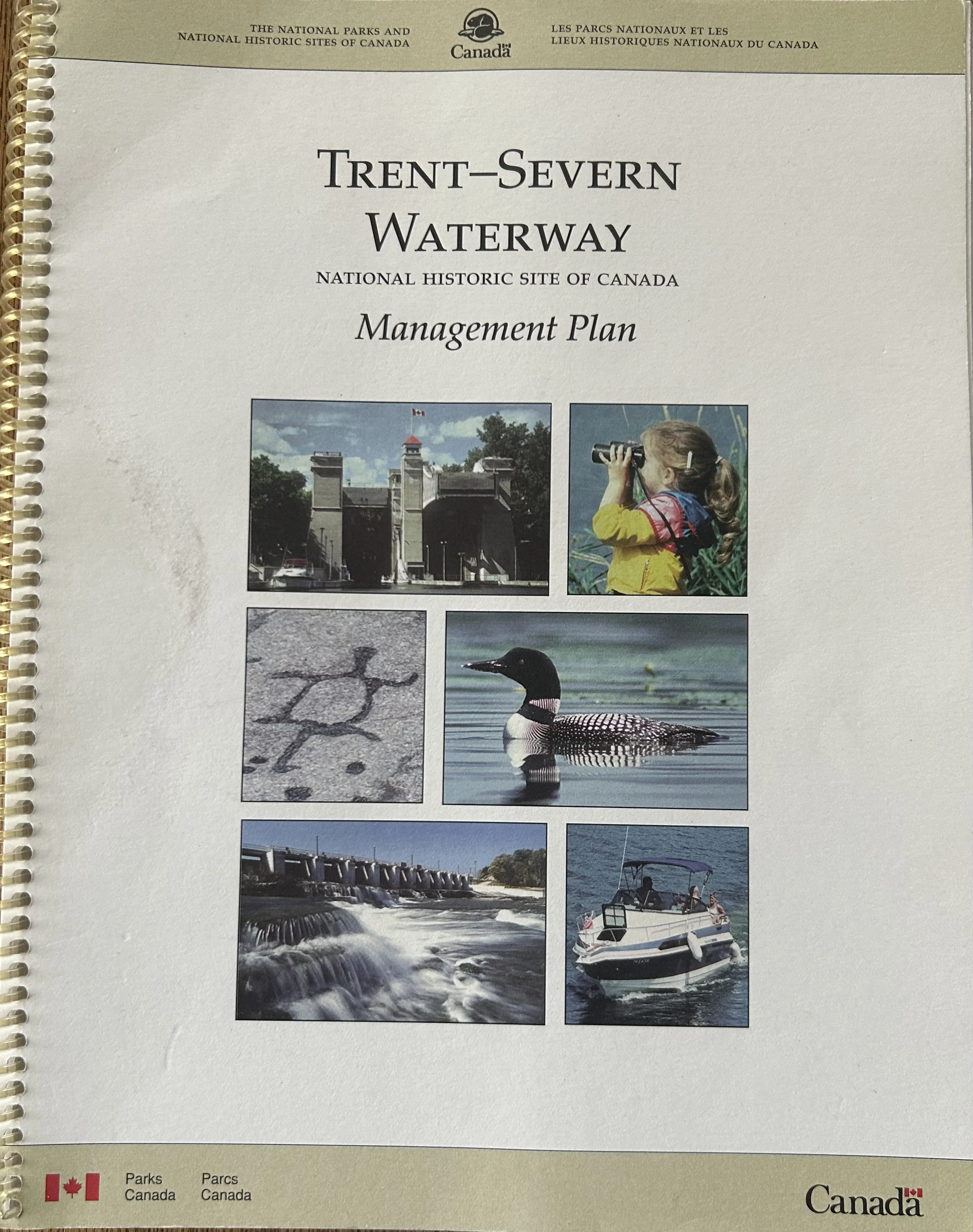
Management Plan for the Trent-Severn Waterway National Historic Site