
Future History: teaching history in landscape schools

History is important as a basis to any profession, as a point of reference, and in our case, as an inspiration for new design. No self-assured profession should avoid facing up to its past. Jan Woudstra
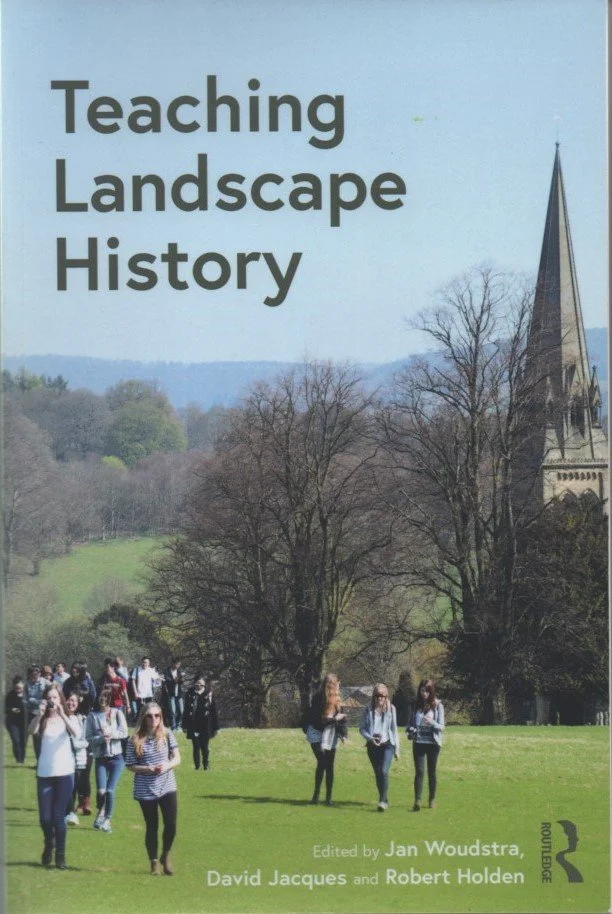
Teaching Landscape History (2024) edited by Jan Woudstra, David Jacques and Robert Holden is the informative and imaginative outcome of a two day hybrid conference Future History: teaching history in landscape schools, at Sheffield University in 2022. With contributors from international and academic backgrounds, and the opportunity and time to reflect between conference and book, many different aspects of history and learning are usefully considered by the editors.
UNESCO and IFLA recognise history as an essential part of any academic training in landscape and provide strategic advice on the purpose and content of landscape education. But the subject is becoming marginalised in the curriculum sometimes through competition from other seemingly more important subjects, and sometimes because it belittles or ignores social injustices of the past. For landscape history to survive it must be on the curriculum and must address questions about its modern emphasis and direction.
So what history should we narrate in the education of landscape architects? whose history are we focusing on? How should we engage students in the history of their chosen profession? What methods and tools can be devised to improve student engagement in history teaching? What resources do we need to improve history teaching?
Using material from the conference and abstracts submitted by other applicants, the book explores in nine chapters, the need for landscape history; the changing meanings of ‘landscape’; the branches of landscape history; the interdisciplinary nature of the subject; identity and dispossession; it examines whose history through case studies; present pedagogy, possibilities from new technology; and reviewing the curriculum. The book is informed, thoughtful and rich in details and examples, and provides a coherent and valuable account.
One of the ambitions of the conference was to work on a Manifesto for teaching landscape history. The editors identified and distilled the key points raised at the conference and this is explained and set out, and not cast in stone, in the final chapter of the book. There are 20 points under five headings: preamble; definition of landscape history - with a sub-heading - the value of history to understanding the landscape; charters; ethical considerations; and, duty to students.
Collectively the 20 points provide a robust framework for the future of teaching landscape history. This will become a greater and more serious challenge for everyone, however, if the number of current teachers of landscape history dwindles.
FOLAR were pleased to join with the Department of Landscape Architecture of the University of Sheffield in the organisation of the conference.
Links and resources
Conference: ‘Future History: teaching history in landscape schools’