
Women in Landscape Architecture
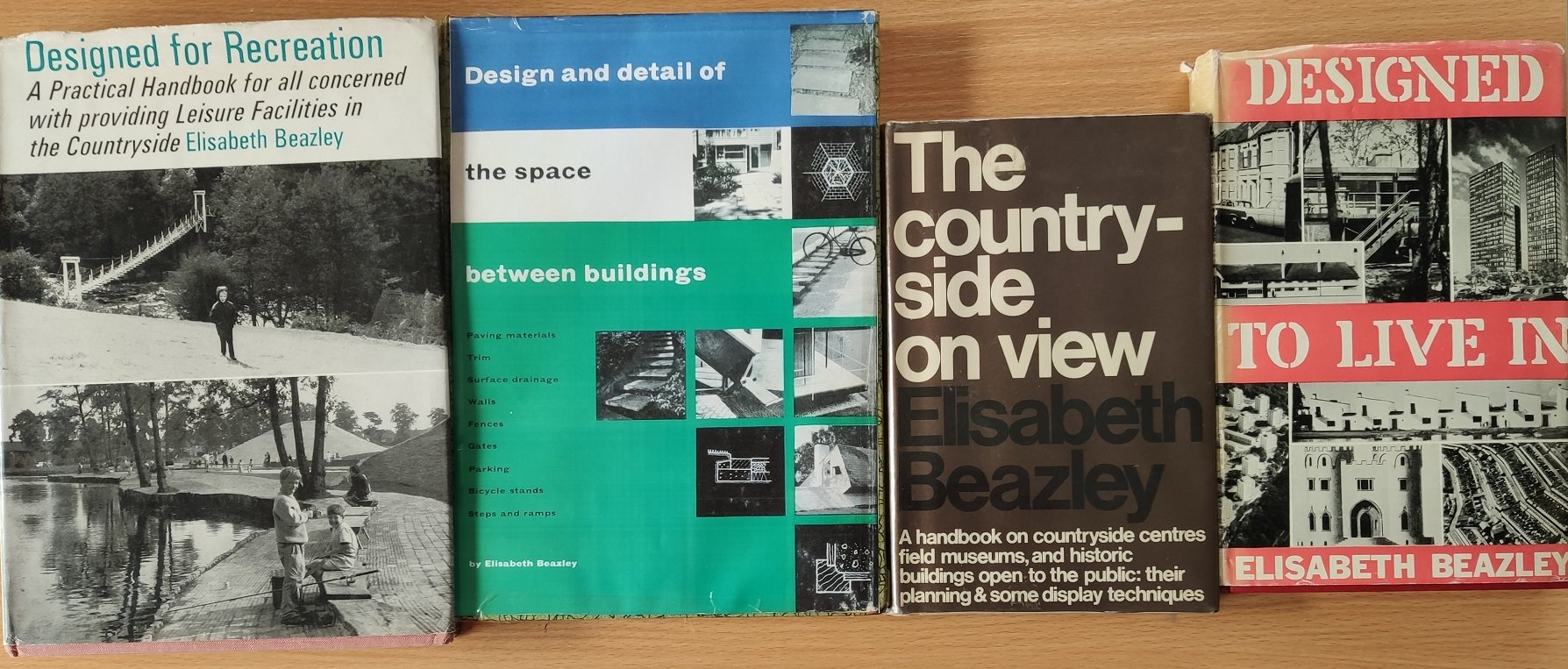
My first encounter with Elisabeth Beazley was in the architecture and landscape department library at Chamber Street in Edinburgh when I was a student in 1978. Her book Design and detail of the space between buildings was on our reading list. I loved this book for its interesting photographs of new and old, the useful information on the uses of a variety of materials for different purposes and locations; and the construction details, brick bonds and pointing, and edges to rural roads. Best of all was that it showed how to use design in a subtle way so that people can read and interpret many aspects of the streetscape without the use of notices or barriers. The example that sticks in my head is knowing at the outset whether an alleyway will take you somewhere – where you can’t see where it goes - or if it is a dead end. This signalling is practical and functional, like interrupting standard paving with granite setts where the beer kegs are dropped off the lorry and rolled across to the access cover into pub basements.
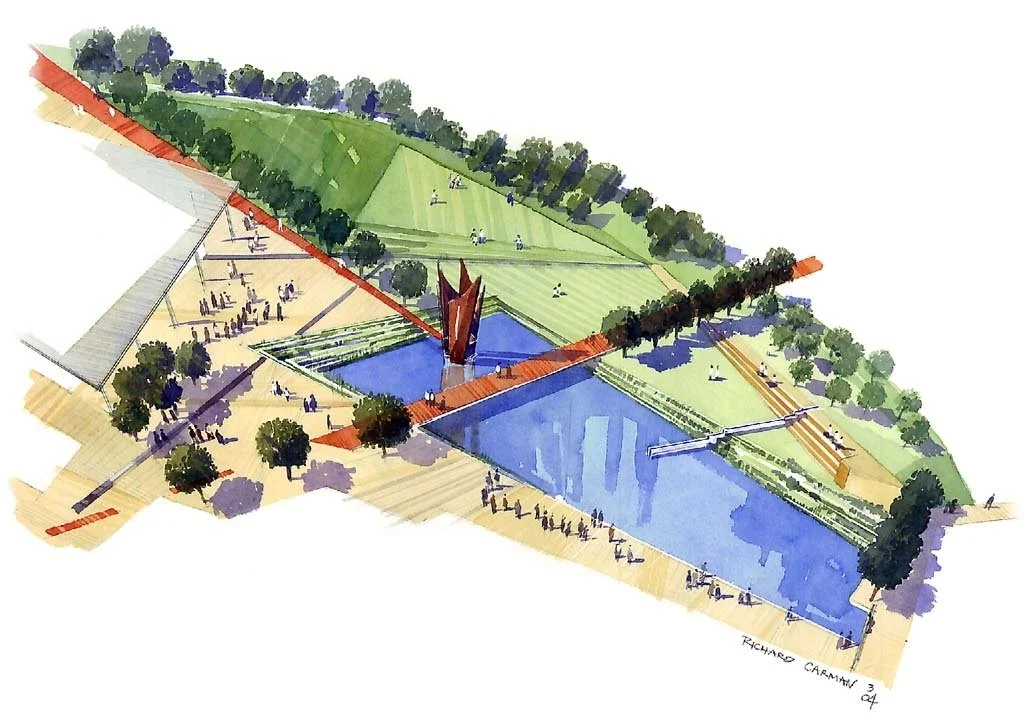
University of Lincoln Central Green Space Image: Diana Armstrong Bell
It has been a great pleasure to discover that Dr Phil Back has researched her work as part of his PhD at Sheffield University, and also that he happily agreed to begin FOLAR’s latest series of talks on Women in Landscape Architecture with his presentation From Adam architecture to toasted sandwiches – Elisabeth Beazley in principle and in practice, and this is the introduction he has written for us about her.
Elisabeth Beazley (1923 – 2018) is not a particularly well-known figure in 20th century landscape architecture and arguably deserves to be better remembered than she currently is. Her work includes the authorship of four important textbooks on architecture and landscape, and over 50 published articles on a wide range of subjects, from supermarkets to Persian pigeon-houses. She spent 25 years as a member of the Executive Committee of the National Trust and worked for around twenty years with its Scottish counterpart, including a fifteen-year engagement at one specific site, which is where we can best see the principles she articulated being put into practice. This presentation looks at the principles she espoused and articulated – often for the first time - and the ways in which her work, and her legacy, exemplify these.
Diana Armstrong Bell came into landscape architecture after studying art at the Gloucestershire College of Art and Design. Since she set up her practice Armstrong Bell Landscape Design in 1984, much of her work has been on large scale public landscapes in the urban realm and operating in the Middle East, mainland Europe and the UK. What she shows in her presentation - Sculpting the Land - Landscape design influenced by abstract art is how her study of art, and particularly abstract art, is a fundamental part of her distinctive and innovative design work. She transforms 2D into 4D with her aesthetically compelling projects, many won through competition, and many of which recipients of international award and recognition.
Photographs by Susan Jellicoe (1907-1986), were used in the Landscape Institute’s journal for several decades and also in her husband’s books, and those she co-authored with him and with other landscape colleagues. But these published photographs represented a tiny fraction of the thousands of photos that she took and catalogued into albums. Not many people outside the Institute’s librarian were shown the collection. So it is very exciting for landscape architecture that Sally Ingram has decided to more thoroughly explore this collection and consider its significance in the history of the post war urban landscape.
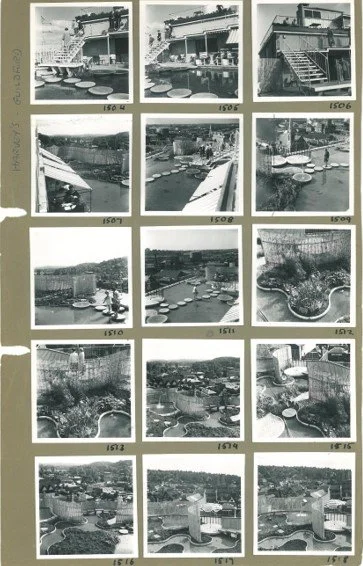
Harvey’s Department Store, Guildford designed by Jellicoe & Coleridge 1956-7, photo by Susan Jellicoe; Image Susan Jellicoe collection at the MERL
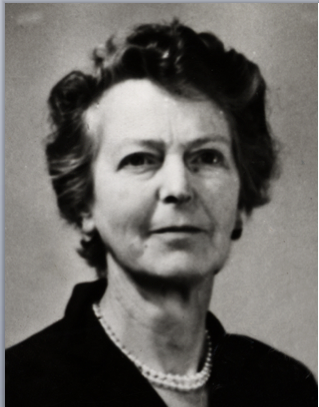
Brenda Colvin
Sally Ingram explains in her talk A snapshot of modernity: the photographs of Susan Jellicoe defining the post war landscape how the collection began when Susan and Geoffrey Jellicoe visited Stockholm shortly after the war. How the small, square format contact prints, painstakingly pasted by Susan Jellicoe in a tight grid on sheets of brown paper and hand labelled, construct a visual diary of the time: designs for housing and open space, public parks, streets and squares, children’s play and the private garden. Sally shares her thoughts on how this landscape of the post war era was captured and assembled by a well-travelled and distinctly modern eye.
This presentation was unfortunately not recorded but a more recent talk (Jan 2025) on Susan Jellicoe by Sally Ingram has been recorded.
Hal Moggridge talks about his former partner, Brenda Colvin (1897-1981), who started her own practice in 1922, went on to share her office with Sylvia Crowe and, in 1969, with a helpful steer from the Jellicoe’s, took Hal into partnership, forming Colvin & Moggridge. the talk focuses on the pioneering work
This presentation was unfortunately not recorded but a more recent talk (Jan 2025) on Brenda Colvin by Hal Moggridge has been recorded.
Speakers: Dr Phil Back, Diana Armstrong Bell, Sally Ingram, Hal Moggridge
May 2021, online