
Landscape of Housing - FOLAR Annual Symposium
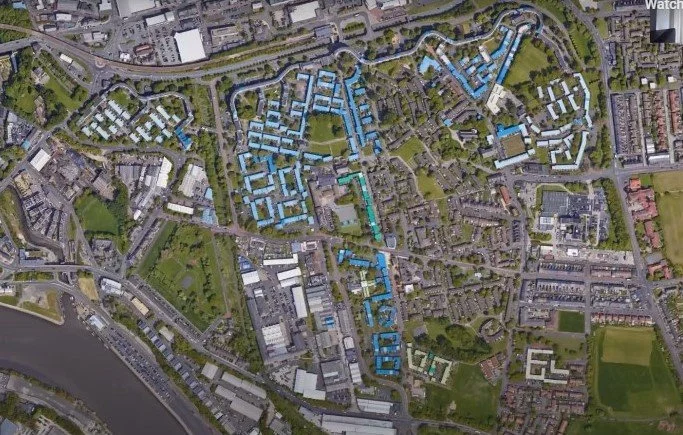
Byker in Newcastle was a social housing project led by architect Ralph Erskine (1914-2005 starting in 1969. The aim was to rehouse an existing community living in condemned substandard and ‘slum’ housing, to phased, new-build homes, with close consultation as part of the process.
Landscape architect Gerry Kemp was part of the original team working on Byker with Erskine, and he talks in depth here about how this ambitious, experimental and pioneering project developed, and how more recently it has been refurbished, and what some of the key issues have been to deal with. This is now Grade II* listed (2007).
With the planning and design of housing today, quality and variety of outdoor spaces will be of as much interest and concern with local authorities, landscape architects and architects as prospective residents. Increasingly, building to a site’s boundaries seems to be a common and accepted practice. Dispensing with landscape is bad news for the street with no space for proper trees, for biodiversity, and attenuating rainwater. For the public, they are denied all the benefits of living with trees and plants and wildlife.
There are other examples of housing schemes where the landscape was considered an essential part of the development. New Ash Green, near Sevenoaks, Kent was initially developed by Span, known for their housing layouts where roads and car parking are largely separated from pedestrians and small gardens lead out to communal green spaces. Karen Fitzsimon tells us more about some of the financial difficulties they encountered, and shows how new architects to complete the scheme trimmed many details. Many architects live in Span estates, and she found an engaging resident willing to share his views on the value of living here. The recording of Karen’s talk will be available hopefully on completion of her PhD.
Our third speaker Alice Grahame is a resident of a small Walter Segal self-build estate in Lewisham. Segal (1907-1985), born and trained in architecture in Germany, moved to the UK in 1936. He is best known for designing simple to assemble prefabricated elements for low cost home ownership. One of the sites is located on a steep slope with not quite enough room, but Grahame was curious to find out more about the architect and his ideas and shared that with us.

Ralph Erskine consulting with young Byker residents
The MERL always produce an exhibition for our annual symposium, and it was a great thrill to see Home and Environment (1948) by Walter Segal included and that it had been Sylvia Crowe’s copy.
There are lots of issues to consider with housing a number of people. and there often seems to be a yawning gap between what is shown on paper and what is implemented later on the ground. Will children have places to play and teenagers somewhere to hang out? Will there be space to grow food and to garden? Will there be trees to shade the footpaths in hot weather? Can people walk and cycle safely? Will rainwater be collected and reused on site? And most critically of all, how will the landscape be managed and budgeted for? Span considered this issue as key and made all the homeowners responsible for this.
Speakers: Gerry Kemp, Alice Grahame, Karen Fitzsimon; Chair Dominic Cole. November 2022 at The MERL
Videos
(New Ash Green by Karen Fitzsimon currently not available)
Links and references
The MERL exhibition on housing now online exhibition
Fieldend Span estate, Talk by Jan Woudstra and James Stride in FOLAR’s Why so Special? series
Creating and experiencing Byker’s playable landscape talk by Sally Watson for FOLAR
Walter Segal Self-Built Architect (2021) Alice Grahame and John McKean [John McKean and Jon Broome were both friends and former colleagues of Walter Segal]